New Thermal Requirements in EV Electronics: Why Standard Conformal Coatings Are No Longer Enough.
UV LED conformal coatings now meet the 160°C demands of EV electronics, while keeping production lines fast and efficient.
The electrification of the automotive powertrain has created a materials qualification problem that conformal coating chemistry was not originally designed to solve. Conventional automotive electronics — engine control units, transmission modules, body electronics — have for decades operated within a thermal envelope that standard acrylic and polyurethane conformal coatings handle comfortably. The upper boundary of that envelope, approximately 130°C continuous, was not arbitrary: it reflected the operating conditions of internal combustion engine electronics, and the coating industry calibrated its qualification standards and chemistry accordingly.
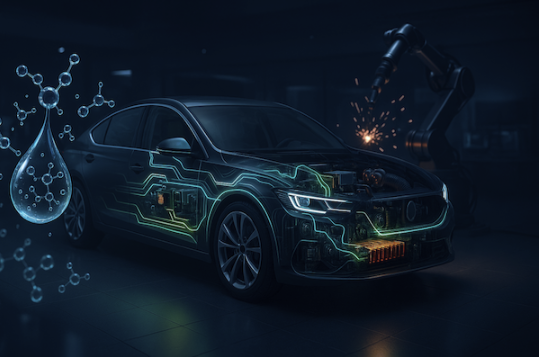
Battery electric vehicles have moved the boundary. Inverter modules switching high currents at elevated frequency generate localised heat that places PCBA surfaces in the 150°C to 160°C continuous operating range. Battery management system electronics, mounted in close proximity to cell arrays, face both elevated temperature and aggressive electrochemical environments. ADAS processing modules, increasingly integrated into underhood and chassis locations to reduce wiring harness complexity, add further thermal load to what was once a relatively benign part of the vehicle. The result is a specification that eliminates many commercially available acrylic and polyurethane conformal coating formulations from automotive qualification at the chemistry level — not through marginal performance shortfall, but through fundamental material limitation.
THE CHEMISTRY CHALLENGE
Why standard formulations fall short at 160°C
Acrylic and polyurethane conformal coatings offer an attractive combination of process flexibility, repairability, and established qualification history under IPC-CC-830. Their limitation in EV power electronics environments is not dielectric performance or moisture resistance — both can be adequate at elevated temperature — but thermal stability of the polymer backbone itself. Standard acrylic formulations begin to exhibit glass transition and mechanical degradation in the 120°C to 140°C range. At 160°C continuous, the coating may soften, lose adhesion at component interfaces, or develop microcracking under the thermal cycling conditions that characterise EV drive cycle operation.
Silicone conformal coatings address the thermal ceiling — rated to 200°C and above in most commercial formulations — but introduce a different qualification risk. Silicone volatile compounds, particularly cyclic siloxanes, can deposit on connector contact surfaces, relay contacts, and wire bond pads within the same assembly or in adjacent modules sharing a common air path. In automotive electronics, where connector contact resistance is a safety-critical parameter, silicone contamination is a disqualifying condition for many OEM programmes. Process teams therefore face a genuine dilemma: standard acrylics cannot meet the thermal specification; silicones introduce contamination risk that many programmes are not willing to accept.
“EV programmes are raising the bar on both thermal performance and production efficiency simultaneously — our UV LED-curable coatings give automotive electronics manufacturers a qualified path forward on both dimensions.”
— Jean-Pierre Douchy, Managing Director, ABchimie
UV LED-CURABLE FORMULATIONS
Meeting the 160°C envelope without VOCs or silicone risk
UV LED-curable conformal coatings represent a chemistry class that addresses both constraints. The polymer networks formed by UV-initiated free-radical or cationic polymerisation can be formulated with substantially higher crosslink density than thermally-cured acrylics, raising the effective glass transition temperature and improving resistance to thermal degradation at the upper end of the EV operating envelope.
ABchimie has developed a range of low-viscosity UV LED-curable conformal coatings engineered to meet the 150°C to 160°C continuous operating specifications now typical of EV inverter, BMS, and ADAS programmes. The formulations are free from volatile organic compounds, eliminating the solvent-recovery infrastructure and ventilation requirements associated with conventional solvent-borne coatings. Under LED lamp arrays operating at standard conveyor line speeds, the coatings reach full cure in seconds — a process characteristic that reduces cure station footprint and energy consumption per board relative to thermal-cure alternatives.
PROCESS INTEGRATION
Single-step co-cure with mechanical reinforcement resin
A secondary reliability challenge in underhood and chassis-mounted EV electronics is vibration-induced solder joint fatigue. Tall or heavy components — large capacitors, power module interconnects, high-density connectors — are particularly susceptible to vibration excitation at their solder joints, and the thermal cycling inherent in EV drive cycles compounds the mechanical stress. Conventional responses include selective underfill, corner bonding, or adhesive reinforcement — each requiring a separate dispensing and cure step, adding line time and equipment.
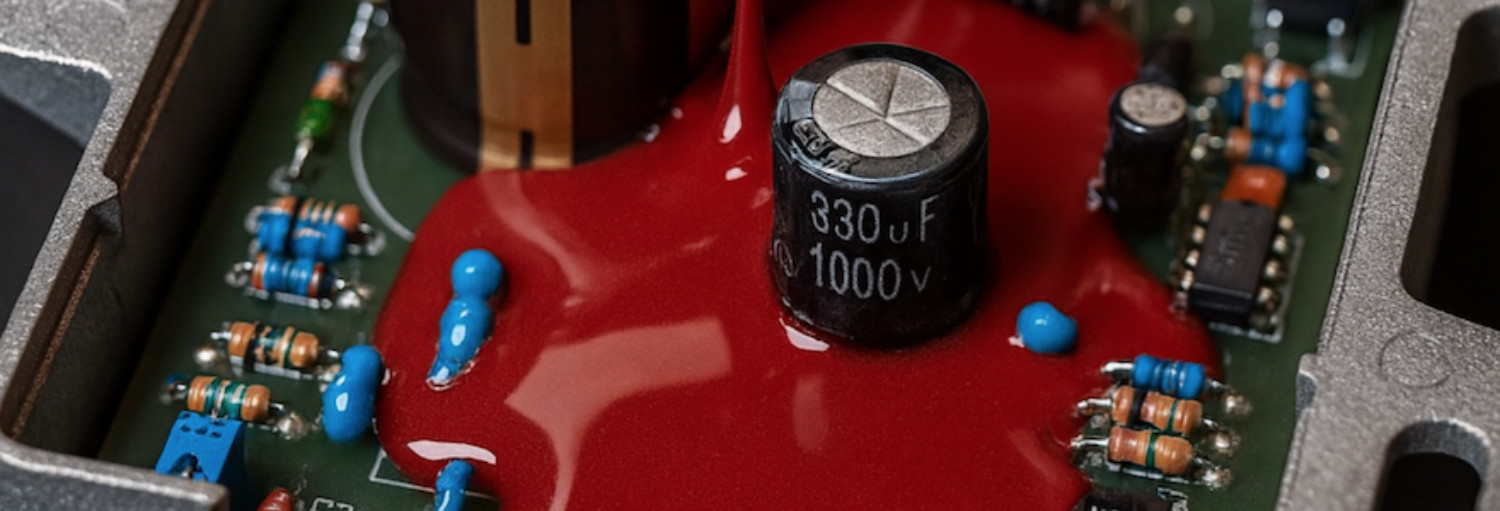
ABchimie has developed a localised mechanical reinforcement resin that can be co-applied alongside the conformal coating and co-cured in a single UV LED step. The resin is dispensed at target locations — component corners, perimeter leads, specific solder joints — in the same conveyor pass as the conformal coating application, with both materials reaching full cure under the same LED exposure. The approach delivers targeted mechanical reinforcement without requiring a separate cure station or extending line cycle time: a meaningful process simplification for assemblers under pressure to maintain throughput while adding protection steps to their EV PCBA lines.
QUALIFICATION & DEPLOYMENT
Production validation across safety-rated and high-thermal-load EV applications
The coatings have been qualified and deployed across safety-critical powertrain control units, battery management systems, and ADAS processing modules, as well as infotainment electronics operating in thermally demanding underdash and centre-console environments — for customers including Eaton, Renault, Volvo, Valeo, and Hartmann. This breadth of application, spanning both ASIL-rated safety functions and high-thermal-load non-safety electronics, reflects the qualification rigour required for automotive electronics supply. ABchimie holds IATF 16949 certification alongside ISO 9001 and ISO 14001, and supports customers through IPC-CC-830-based qualification testing, thermal cycling evaluation, and full programme lifecycle technical assistance from its in-house R&D laboratory in Corbelin, France.
For process engineers beginning conformal coating qualification for a new EV programme, the practical selection framework has simplified: the 150–160°C thermal specification, combined with VOC-free process requirements and connector contamination sensitivity, narrows the chemistry field substantially. UV LED-curable formulations with demonstrated production history in comparable EV environments are the most direct path to a qualified process that meets both the thermal specification and the production throughput requirements now standard in high-volume automotive PCBA assembly.
CONFORMAL COATING
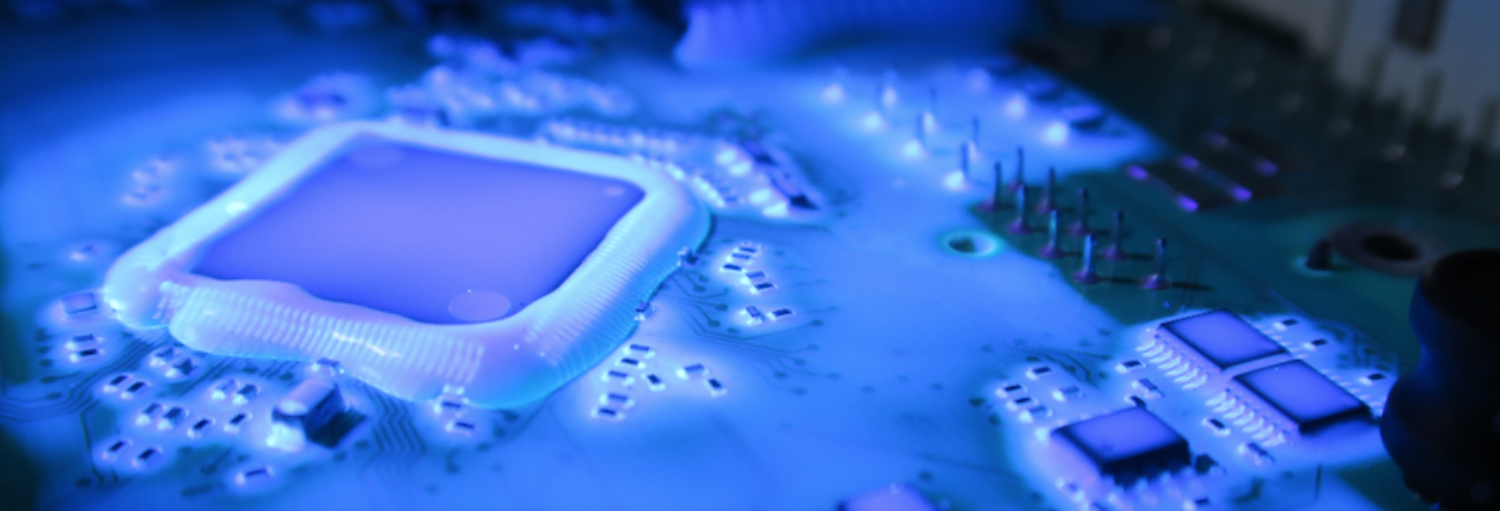
- Providing high level environmental protection for PCBAs.
UV GLUE
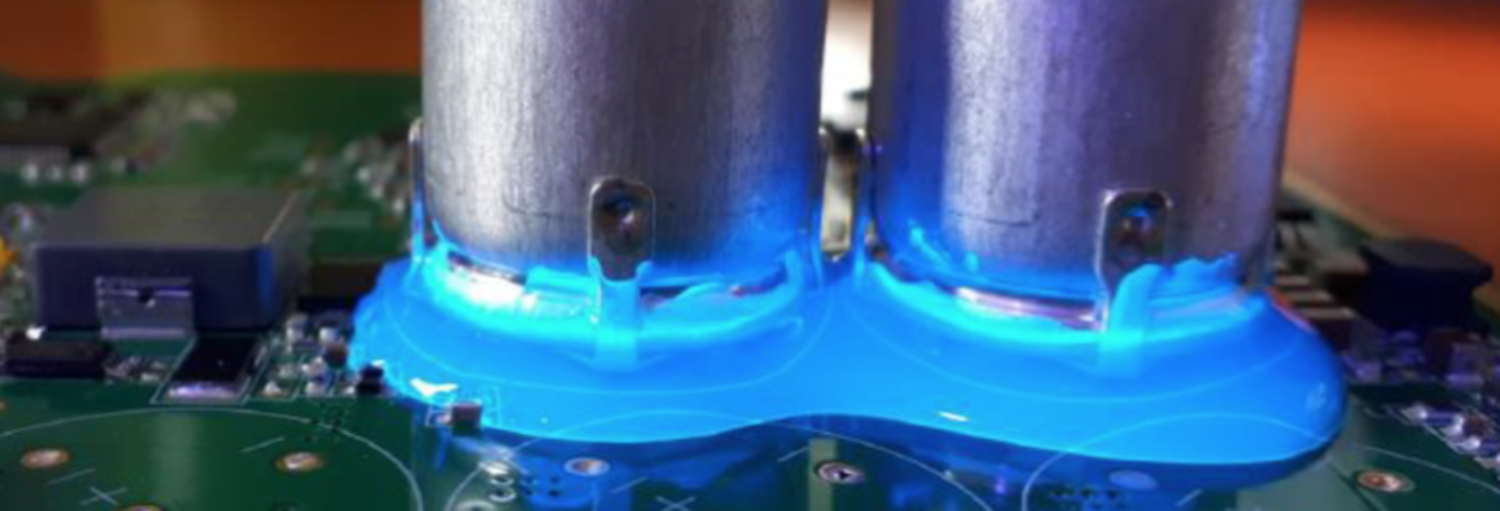
- Precise bonding that evenly distributes stress across surfaces.
EPOXY & PU RESINS
- Insulation and protection from moisture, vibration, and shock.

